
QUICK ANSWER
Constipation is common in older adults, but it should not automatically be dismissed as ageing.
Reduced physical activity, inadequate fluids, a low-fibre diet, medicines and underlying health conditions may all contribute. New, persistent or severe constipation—especially with bleeding, abdominal pain, vomiting or weight loss—needs medical evaluation.
Constipation in older adults may mean passing stools less often than usual, having hard or dry stools, straining during bowel movements or regularly feeling that the bowel has not emptied completely.
Dietary changes, reduced activity, dehydration and certain medicines frequently contribute to the problem. However, persistent constipation can sometimes indicate an underlying condition. Understanding the cause is the first step towards finding safe and lasting relief.
What Is Considered Constipation?
A person does not necessarily need to pass stool every day to have a healthy bowel pattern. Normal frequency differs from one person to another. A noticeable change from the person’s usual bowel routine is often more important than frequency alone.
Less frequent
Passing stool fewer than three times a week or less often than usual.
Hard or painful
Passing hard, dry or lumpy stools with pain or excessive straining.
Incomplete emptying
Feeling blocked or that the bowel has not emptied completely.
- Spending an unusually long time in the toilet
- Needing excessive effort or manual assistance to pass stool
- Abdominal bloating or discomfort accompanying a change in bowel habit

Why Everyday Habits Matter
In older adults, bowel regularity is closely connected to daily habits. Suitable fluid intake, fibre-rich meals and regular movement can work together to keep stools softer and support normal intestinal activity.
Why Is Constipation More Common in Older Adults?
Ageing itself is not always the direct cause. Several age-related changes can occur together and affect bowel movement. Older adults may become less active, drink less water, eat smaller meals or take multiple medicines. Conditions affecting the thyroid, nerves, muscles or digestive system can also contribute. For many people, constipation has more than one cause.
Common Causes of Constipation in Elderly People
1. Reduced physical activity
Walking and physical movement help support normal intestinal activity. Arthritis, joint pain, weakness, recent surgery, illness or difficulty walking may make an older adult less active. Spending long periods sitting or lying down can contribute to slower bowel movements. Even gentle activity, when medically suitable, may help improve regularity.
2. Inadequate water intake
The sensation of thirst may become less noticeable with age. Some people also drink less to avoid frequent urination, particularly at night. When fluid intake is inadequate, the colon absorbs more water from stool, making it harder and more difficult to pass.
People with kidney disease, heart disease or a medically prescribed fluid restriction should ask their doctor how much fluid is appropriate for them.
3. A low-fibre diet
Dietary fibre adds bulk and supports stool movement through the intestine. Older people may consume less fibre because of reduced appetite, dental problems, difficulty chewing or swallowing, reliance on processed foods or dietary restrictions.
- Vegetables and fruits
- Beans and pulses
- Whole grains and oats
- Other fibre sources recommended by a dietitian
Fibre should be increased gradually. A sudden increase can cause gas or bloating, particularly when fluid intake is inadequate.
4. Medicines and supplements
Medication-related constipation is particularly relevant in older adults who take several medicines. Possible contributors include certain strong painkillers, iron or calcium supplements, antacids, blood-pressure medicines, antidepressants, antipsychotic medicines, Parkinson’s medicines and medicines for bladder-control problems.
Important: Never stop a prescribed medicine without consulting the treating doctor. The doctor may adjust the dose, recommend an alternative or suggest a safe way to manage constipation.
5. Hypothyroidism
An underactive thyroid can slow several body processes, including digestion. Constipation associated with hypothyroidism may occur with persistent tiredness, unexplained weight gain, dry skin, feeling unusually cold, muscle weakness or a slow heart rate. A doctor may recommend a thyroid blood test when these symptoms are present.
6. Changes in routine or toilet access
Travel, hospitalization, altered meal timings, prolonged bed rest or changes in toilet access can disturb regular bowel habits. Some elderly people delay passing stool because they need help reaching the toilet or feel uncomfortable asking for assistance. Repeatedly ignoring the urge can worsen constipation.
7. Diabetes and neurological conditions
Diabetes, Parkinson’s disease, stroke, multiple sclerosis, spinal cord disorders and dementia may affect the nerves and muscles involved in digestion and bowel emptying. Lifestyle measures alone may not be sufficient; treatment should address the underlying condition as well.
8. Colon, rectal or pelvic-floor problems
Sometimes stool reaches the rectum but becomes difficult to expel because the pelvic-floor muscles do not coordinate properly. Rectal prolapse, bowel narrowing, previous intestinal surgery or, less commonly, a growth obstructing stool passage can also cause constipation. A sudden or persistent change in bowel habits requires evaluation, particularly in an older person.
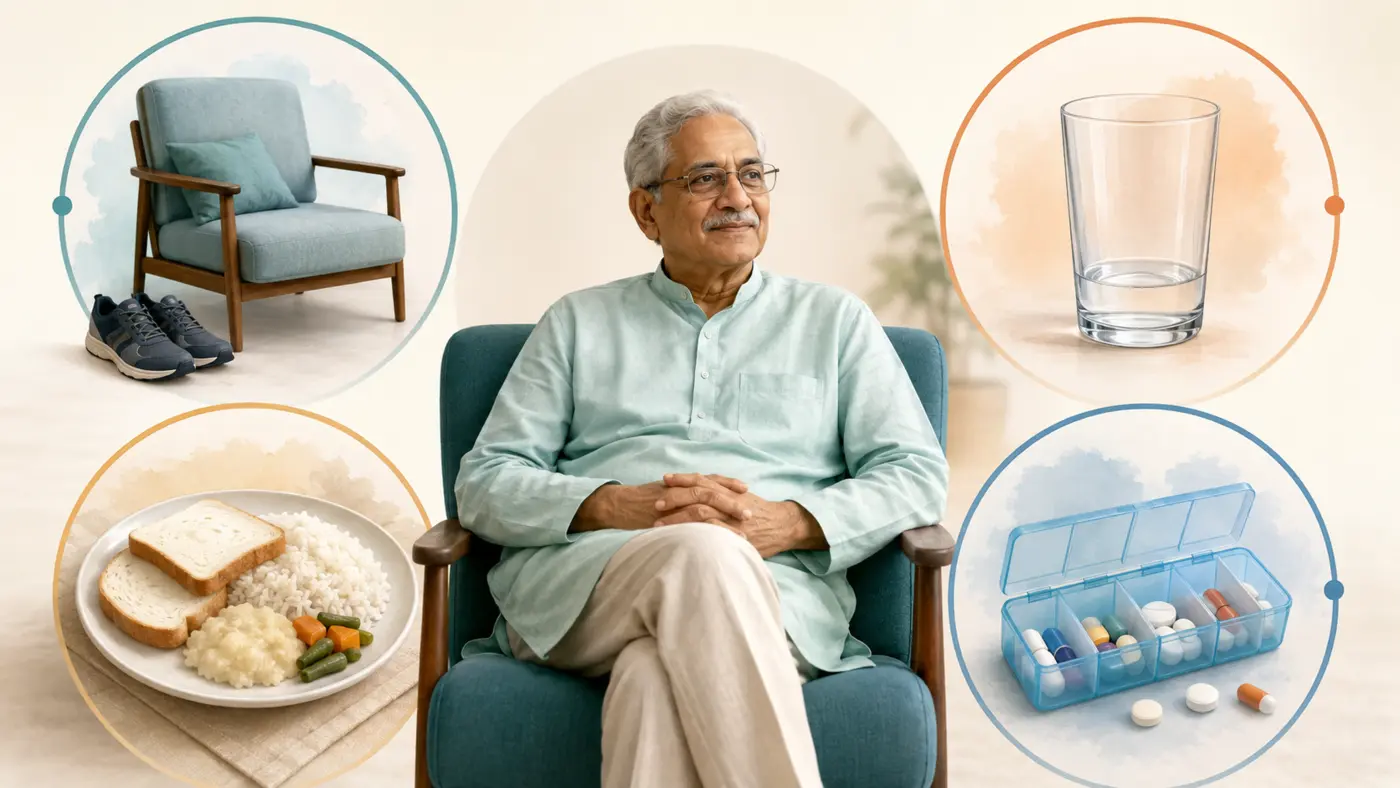
Often, There Is More Than One Cause
Constipation may develop from a combination of reduced activity, inadequate hydration, a low-fibre diet and medicine side effects. Identifying all the contributing factors is more useful than repeatedly treating only the symptom.
Can Constipation Cause Complications?
Occasional constipation may cause temporary discomfort. Long-standing or severe constipation can lead to:
- Painful anal fissures
- Piles or haemorrhoids
- Rectal bleeding
- Faecal impaction
- Stool leakage around impacted stool
- Rectal prolapse
- Loss of appetite and weakness
- Difficulty passing urine
Faecal impaction occurs when a large amount of hard stool becomes stuck in the rectum. It may cause abdominal discomfort, confusion, loss of appetite or unexpected watery stool leakage. An elderly person with these symptoms should be examined by a doctor.
How to Relieve Constipation in Older Adults Safely
The appropriate treatment depends on the cause, severity and overall health of the person. The following measures may help when there are no warning symptoms or medical fluid and dietary restrictions.
Increase fibre gradually
Introduce vegetables, fruits, beans, pulses, whole grains and oats slowly. Fibre works better with suitable fluid intake. A rapid increase can worsen bloating.
Encourage hydration
Regular water and suitable fluids can help prevent dry stools. The appropriate amount depends on health, weather, activity and medical restrictions.
Support safe movement
Walking or gentle exercise can support bowel activity. Exercise should match the person’s balance, mobility, joint health and medical condition.
Establish a toilet routine
Encourage toilet use at a consistent time, often after breakfast. Provide adequate time, privacy and safe access. Do not suppress the urge to pass stool.
Review medicines with a doctor
If constipation began or worsened after a new medicine, inform the prescribing doctor. A medication review is particularly important for elderly people who take several medicines or regularly use painkillers, iron or calcium supplements.
For additional practical guidance, read about a piles-friendly diet and easier bowel movements.

Build a Practical Daily Routine
Small, consistent changes are usually easier for an older person to maintain. Gradually improve fibre intake, encourage suitable fluids, support gentle walking and establish a regular, unhurried toilet routine.
Are Laxatives Safe for Elderly People?
Laxatives can be helpful, but no single laxative is appropriate for everyone. Some add bulk to stool, some draw water into the bowel and others stimulate bowel movement. The correct choice depends on hydration, mobility, other medicines and whether faecal impaction or bowel obstruction is possible.
Regular self-medication may delay diagnosis of the cause. Incorrect or excessive use may lead to dehydration, electrolyte imbalance, diarrhoea or abdominal discomfort.
An older adult should consult a doctor if laxatives are repeatedly required, constipation returns when medicine is stopped, the recommended laxative is not working, abdominal pain or swelling is present, or the person has kidney or heart disease.
Do not repeatedly administer laxatives to someone with severe pain, vomiting, marked abdominal swelling or inability to pass gas without urgent medical advice.
When Is Constipation an Emergency?
Seek urgent medical attention for:
- Severe or constant abdominal pain
- A swollen or very tender abdomen
- Repeated vomiting
- Inability to pass stool or gas
- Fever
- Significant rectal bleeding
- Black or dark tar-like stool
- Sudden confusion, weakness or dehydration
These symptoms may indicate faecal impaction, bleeding or an intestinal obstruction requiring prompt treatment.
Warning Signs That Require a Doctor’s Evaluation
- Blood in the stool
- A new and persistent change in bowel habits
- Unexplained weight loss or reduced appetite
- Recurrent abdominal pain
- Constipation that does not improve with basic measures
- Increasing dependence on laxatives
- A family history of colorectal cancer
- Alternating constipation and diarrhoea
- Unexplained anaemia or persistent tiredness
These symptoms do not always mean that a serious disease is present. However, they should be evaluated rather than repeatedly treated at home.
How Does a Doctor Identify the Cause?
The doctor may ask about the usual bowel pattern, duration of symptoms, stool consistency, diet, fluid intake, physical activity, medicines and supplements, previous operations, weight loss, bleeding, abdominal pain and existing thyroid, diabetic or neurological conditions.
A physical examination may include checking for dehydration, abdominal swelling or tenderness. Depending on the symptoms, blood tests, stool tests, imaging or a rectal examination may be advised. Persistent constipation, rectal bleeding or unexplained bowel-habit changes may sometimes require a colonoscopy.
Not everyone requires every investigation. Testing is selected according to the person’s age, symptoms and risk factors.
Constipation may also occur with bloating, retained gas and abdominal noises. Learn more about the causes of stomach gurgling sounds.
Frequently Asked Questions
The answers below are displayed openly so readers can find the information immediately.
Is it necessary to pass stool every day?
No. Healthy bowel frequency differs between individuals. Some people may pass stool more than once a day, while others may go only a few times a week. Hard stools, excessive straining, pain and a change from the usual bowel pattern are more meaningful signs of constipation.
What is the best natural remedy for constipation in old age?
There is no single remedy suitable for everyone. Adequate permitted fluids, gradually increasing dietary fibre, safe physical activity and a regular toilet routine may help. Kidney disease, heart disease, swallowing problems and symptoms of intestinal obstruction must be considered first.
Can milk cause constipation in elderly people?
Milk does not cause constipation in everyone. However, a diet containing large quantities of dairy products and very little fibre may contribute to constipation in some people.
Can constipation cause watery stool leakage?
Yes. Liquid stool can pass around a hard mass of impacted stool. This may look like diarrhoea but can indicate faecal impaction, especially in frail, bedridden or less mobile elderly people. Medical assessment is advised.
Should constipation be ignored if there is no pain?
No. Persistent constipation should still be discussed with a doctor, particularly when it is new, worsening, associated with weight loss or requires frequent laxative use.
Can an elderly person use laxatives every day?
Daily laxative use should be guided by a doctor. Repeated need may indicate medicine side effects, faecal impaction or an underlying condition that needs evaluation.
When might a colonoscopy be advised?
A doctor may consider colonoscopy when constipation is persistent or accompanied by bleeding, unexplained weight loss, anaemia, a significant change in bowel habits or other risk factors. The decision is individualised.
The Takeaway
Constipation in older adults is often related to reduced activity, inadequate hydration, low fibre intake, medication side effects or underlying medical conditions.
Small changes in diet, permitted fluid intake, physical movement and toilet routine may help. However, treatment should be adapted to the person’s overall health rather than relying on repeated self-medication.
Persistent constipation, blood in the stool, severe abdominal pain, vomiting, inability to pass gas or unexplained weight loss requires medical evaluation.
Recurring constipation deserves proper evaluation.
If your parent or grandparent has persistent constipation, rectal bleeding, abdominal pain or a sudden change in bowel habits, timely assessment can identify the cause and help prevent complications.
Medical disclaimer: This article is for general health awareness and does not replace an individual medical consultation, diagnosis or treatment plan.